

Introduction
A cracked tree trunk usually doesn’t look dramatic at first. Sometimes it’s a thin split running down one side of the bark. Sometimes it looks more like a seam opening slowly after storms or heavy wind. A lot of homeowners notice it, keep an eye on it for a while, and hope the tree settles back out on its own.
That’s where things can get risky. A crack in the trunk often means the tree is already struggling structurally somewhere inside. Summer storms, extra canopy weight, and wet ground usually make those weak areas worse. This guide breaks down what a cracked tree trunk can actually mean, the dangerous tree signs homeowners should watch for, and when it’s smart to stop monitoring it and have the tree looked at before it turns into a bigger problem.
A Crack in the Trunk Usually Means the Tree Is Under Stress
Trees don’t split open randomly.
Most of the time, cracks happen because pressure has been building somewhere in the structure already. Wind, heavy limbs, storm damage, decay, or shifting roots all create stress inside the tree over time.
Eventually the wood starts separating.
Some Cracks Stay Small for a While
This is part of what makes them easy to ignore.
The tree still has leaves. It still stands upright. Everything around it feels normal enough that homeowners assume the damage probably isn’t serious yet.
Meanwhile the crack often keeps spreading slowly underneath the bark.
Summer Weather Makes Existing Weakness Worse
Heat, moisture, and storms add more movement to already stressed wood.
A cracked tree trunk that survived spring storms can become much less stable once summer weather keeps pushing against it week after week.
That’s why cracks deserve more attention during this time of year.
Not All Cracks Look the Same
Some are obvious right away. Others blend into the bark enough that homeowners barely notice them at first.
The shape and location usually matter more than people realize.
Vertical Cracks Along the Trunk
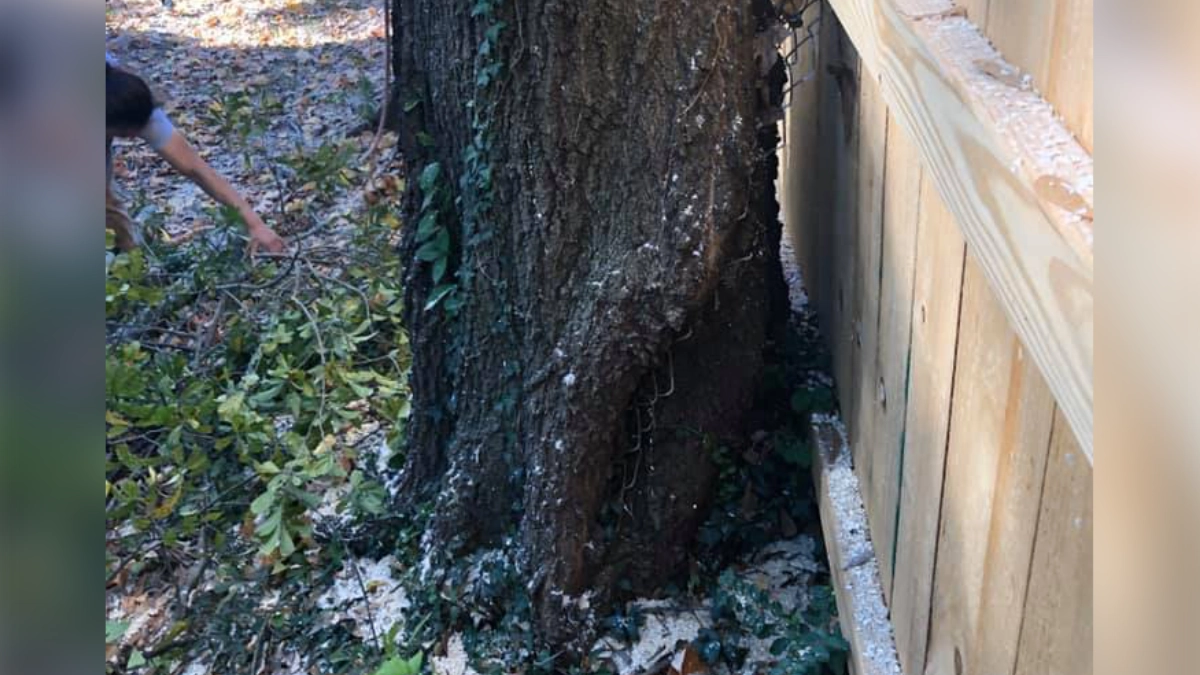
Long splits running up and down the trunk are one of the more common dangerous tree signs after storms.
Sometimes they happen after lightning strikes. Other times they develop from pressure and movement over time.
Either way, the trunk is no longer holding together the same way it should.
Cracks Where Large Limbs Attach
Heavy limbs place a lot of pressure on attachment points, especially once the canopy fills out during summer.
If a split starts forming where a large branch meets the trunk, that section may already be weakening structurally.
Deep Open Splits Matter More
Small surface cracks in bark are one thing.
Deep openings exposing fresh wood underneath are different. Those cracks often mean the internal structure has already been compromised.
Trees Don’t Usually Heal the Way Homeowners Expect
This is where a lot of confusion happens.
People sometimes assume trees heal like skin heals. That the crack will simply close back up over time.
Trees don’t really work that way.
The Tree Tries to Seal Around Damage
A healthy tree may begin forming protective growth around injured areas. But that doesn’t necessarily mean the structural weakness disappeared.
The damaged section underneath can still remain unstable.
Internal Decay Can Start Later
Once a cracked tree trunk exposes inner wood, moisture and insects often move in more easily.
That’s where decay sometimes begins months after the original crack first appeared.
Summer Storms Push Cracked Trees Harder
A tree carrying structural damage becomes much less predictable once summer weather starts stacking up.
That’s where the risk usually changes.
Full Canopies Add More Weight
By summer, the tree carries its heaviest canopy of the year.
More leaves mean more weight and more wind resistance. That pressure keeps pulling against the weakened area every time storms move through.
Wet Soil Reduces Stability Underground
Heavy summer rain softens the soil around the roots.
If the trunk is already cracked and the root system starts shifting too, the entire tree becomes harder to predict during storms.
Wind Finds Weak Areas Fast
Strong wind almost always exposes the weakest point in the structure first.
That’s why some cracked trees seem stable for months, then suddenly split further during one storm.
Dangerous Tree Signs That Often Show Up With Cracks
The crack itself usually isn’t the only warning sign.
Other changes often start happening around the same time.
Large Limbs Begin Sagging
Heavy branches hanging lower than usual often mean the tree is redistributing weight because the structure weakened somewhere else.
Bark Starts Separating
Peeling bark around the cracked section can point toward deeper stress underneath.
Sometimes the bark loosens because the wood underneath is no longer stable.
Dead Branches Start Appearing
Trees under stress sometimes stop sending nutrients evenly through the canopy.
That’s why dead limbs often begin appearing after structural damage develops.
The Tree Starts Leaning More
A cracked trunk combined with shifting roots creates a much more dangerous setup during storm season.
That combination deserves attention quickly.
Trees Near Homes Become a Bigger Concern
Location changes everything.
A cracked tree in an open wooded area creates one level of concern. A cracked tree leaning over the roof creates another.
That’s usually where homeowners stop feeling comfortable just “keeping an eye on it.”
One Failed Limb Can Still Cause Major Damage
The entire tree doesn’t need to fall for serious problems to happen.
One large branch failing from a cracked attachment point can damage roofing, vehicles, fences, or power lines very quickly.
Tight Neighborhoods Leave Very Little Room
A lot of Greenville and Spartanburg area neighborhoods don’t leave much open space around mature trees anymore.
That means cracked trees often require more controlled removal or trimming once the damage becomes structural.
Why Waiting Usually Makes the Situation Harder
A cracked tree rarely becomes less stressed over time.
Most situations slowly move in the opposite direction.
Cracks Continue Spreading
Once movement starts inside the wood, additional storms keep adding pressure to the same weak area.
The split often grows larger over time.
The Tree Becomes Less Predictable
Trees with structural damage don’t respond to wind normally anymore.
That unpredictability is what makes removal more technical later if the condition worsens.
Decay and Insects Move In Faster
Moisture inside exposed wood creates the kind of environment insects and rot tend to like.
That secondary damage sometimes becomes just as serious as the original crack itself.
Why Homeowners Usually Call Professionals for Cracked Trees
A cracked tree trunk is difficult to judge from the ground.
Some cracks remain manageable with trimming and weight reduction. Others point toward deeper structural failure that homeowners can’t fully see from outside the tree.
That’s where experience matters.
Tanner’s Legendary Tree Service helps homeowners throughout Greenville, Spartanburg, Greer, Inman, and surrounding Upstate communities evaluate cracked trees before they become emergency removals.
Sometimes the safest option is selective trimming. Sometimes the damage runs deeper than expected. The important part is understanding what’s actually happening before summer storms push the tree past its limit.
Don’t Ignore the Warning Signs While the Tree Is Still Standing
A cracked tree trunk is usually the tree telling you something changed structurally.
The problem is the damage often keeps getting worse quietly. One more storm. One more heavy rain. One more summer with extra canopy weight pulling against the same weak area.
That’s usually when the situation changes fast.
If you’ve noticed cracks forming along the trunk or major limbs around your property, Tanner’s Legendary Tree Service can inspect the tree, explain what’s going on, and help determine whether trimming, support, or removal makes the most sense before the risk gets worse.
Call today before a cracked tree becomes emergency damage around your home.