
Trees too close to your house can look like a feature, not a problem. They provide shade in the summer, privacy from the street, and the kind of curb appeal that makes a property feel established and well-kept. But here’s the thing: trees that grow too close to a structure create real risks that aren’t always obvious until something goes wrong, and by then the damage is already done.
Spartanburg homeowners deal with this more than they realize. The Upstate South Carolina climate is great for trees. They grow fast here. And fast-growing trees near homes are exactly the kind of situation that sneaks up on you. What looked like a manageable tree five years ago can be a serious liability today.
Why a Tree Too Close to Your Roof Is More Than a Cosmetic Problem
The most visible risk of trees too close to a house is what happens at the roofline. Branches that overhang or actually touch the roof don’t just sit there quietly. Every time the wind blows, those branches scrape back and forth across your shingles. Over time, that friction wears away the protective granules on asphalt shingles and shortens the life of your roof significantly.
Debris is the other part of this. Leaves, twigs, seed pods, and bark accumulate in gutters when you have overhanging trees. Clogged gutters cause water to back up and pool. That pooling water can work its way under roofing materials, rot the fascia boards and soffits, and in serious cases, contribute to foundation issues as water drains improperly around the base of the house.
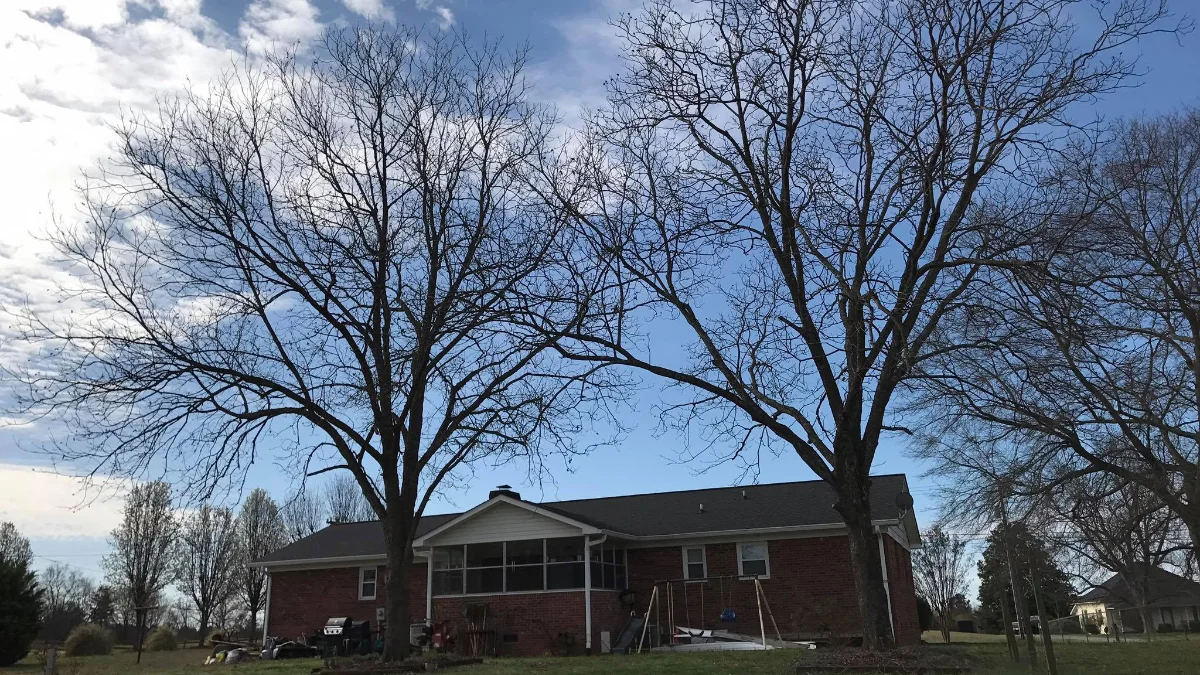
And then there’s the storm scenario. A branch that breaks under high wind and falls on your roof can cause structural damage in an instant. It doesn’t have to be a massive limb. Even a mid-sized branch dropping from height can punch through decking or damage flashing. The rule of thumb worth remembering: if a branch can reach your roof when it falls, it’s too close. Full stop.
Root Damage Is the Risk Nobody Sees Coming
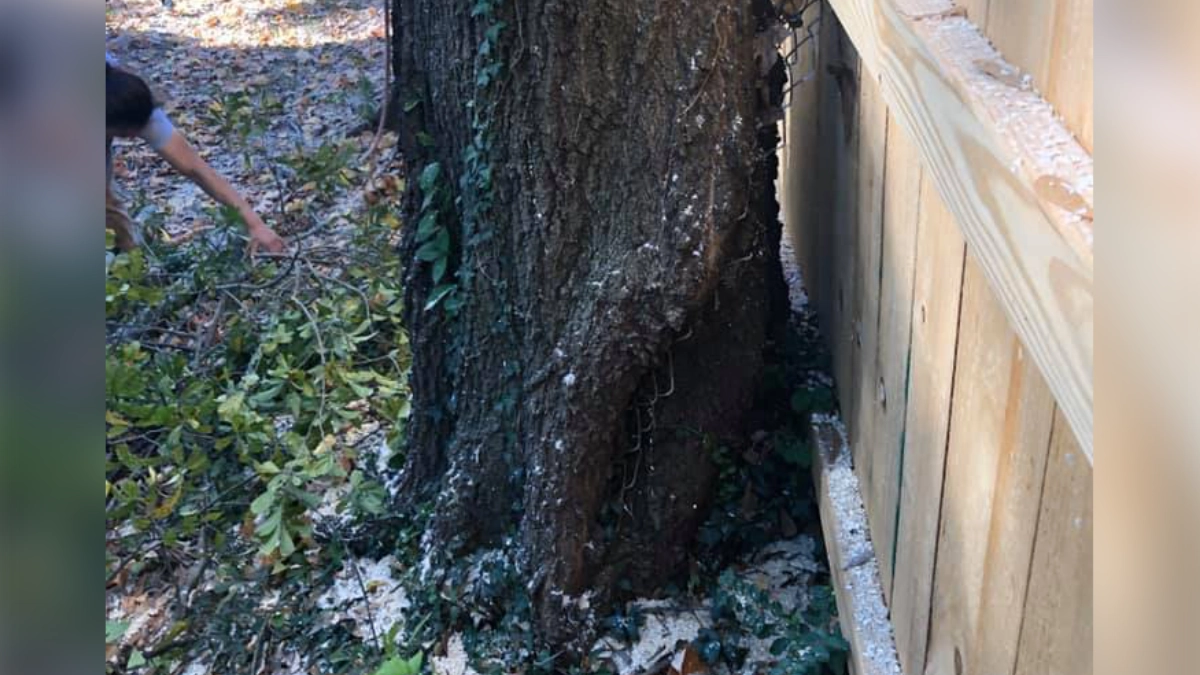
Foundation damage from tree roots is the slow-motion version of the problem. You won’t notice it right away, and that’s what makes it dangerous. Tree roots follow water and nutrients through the soil. If your foundation has any moisture around it (and most do), roots will grow in that direction.
Over time, roots can push up against a foundation, work into small cracks, and cause those cracks to widen. They can grow under a slab and cause lifting or uneven settling. They can infiltrate drainage lines and create expensive plumbing problems. By the time you see visible cracks in your foundation, the roots may have been growing toward it for years.
Trees within 10 to 15 feet of a foundation deserve serious attention, especially if you’re dealing with fast-growing species. Silver maple, willow, and cottonwood are the common offenders in this region. They have aggressive root systems and they grow quickly. If you’ve got one of those trees close to your home and you’ve been putting off an assessment, that’s worth revisiting. (Not trying to alarm you, just being straight with you about the risk.)
Storm Damage Risk and the Striking Distance Rule
A tree within striking distance of your home is a liability every time a storm rolls through. Spartanburg and the broader Upstate South Carolina area see significant storm activity from late summer through fall. Tropical remnants, severe thunderstorms, and ice events in winter all put pressure on trees near structures.
Here’s how to think about striking distance: it’s roughly equal to the height of the tree. A 50-foot tree can fall 50 feet in any direction. If your home sits within that radius, the tree can reach it when it falls. Most homeowners underestimate how far a tree can travel when it comes down, especially when it’s leaning or when the root system is already compromised.
Trees that are already stressed, leaning, or dealing with root problems are at much higher risk of failure. And stress isn’t always visible from the ground. A tree can look full and healthy on the outside while the interior wood is decaying or the root system is weakening. That’s one reason a professional eye matters here. The most common source of storm damage calls in this area involves trees too close to homes. It’s not an edge case. It’s the norm.
Pest Problems and Moisture Issues Nobody Talks About
Branches that touch or hang over a roof create a direct bridge for pests. Squirrels, carpenter ants, termites, and other insects use tree limbs as a highway right to your home. Once they find a way in through the roofline or soffits, the damage can be significant and expensive. This is especially true in older homes where the wood trim and fascia may already have some age on them.
Constant shade from overhanging branches keeps the roof damp. A dry roof sheds moisture and stays clean. A shaded, damp roof grows moss and algae. Those organisms hold moisture against the shingles and accelerate wear. You’ll see that dark streaking or green growth on roofs in shaded areas, and it’s not just an appearance issue. It shortens shingle life and can void roofing warranties.
The gutters tie back into this too. Tree debris sitting in gutters holds moisture and creates a perfect environment for rot in the wood components right below the roofline. It’s a connected chain of problems, and it all starts with branches that are too close to the structure.
Power Lines and Trees Are a Serious Combination
A tree growing toward or into power lines is a different category of risk. It’s not just a property issue. It’s a safety issue for your household and your neighbors. In Spartanburg and across Upstate South Carolina, utility companies will sometimes trim trees that are interfering with lines, but they don’t always do it on a schedule that’s designed to protect your property.
Utility trimming is focused on keeping lines clear. It’s not focused on the health of your tree or what the pruning looks like when they’re done. In some cases, aggressive utility trimming can leave a tree structurally unbalanced and more likely to fail in the next storm. That’s why getting ahead of this situation with a professional assessment makes sense.
A tree that falls into a power line during a storm can cause outages, electrical fires, and serious damage to your home. If a tree on your property is growing toward lines, don’t wait for the utility company to handle it on their timeline.
What You Can Actually Do About It
There are three realistic options when a tree is too close to your home. The right one depends on the tree, its health, its size, and how serious the risk is.
Option one is professional trimming. If the tree is healthy and structurally sound, regular trimming can manage the risk by keeping branches away from the roof and structure. This isn’t a one-time fix. It’s an ongoing practice. Professional tree trimming from Tanner’s Legendary Tree Service is designed to address exactly this kind of situation, keeping trees healthy while reducing the risk they pose to nearby structures.
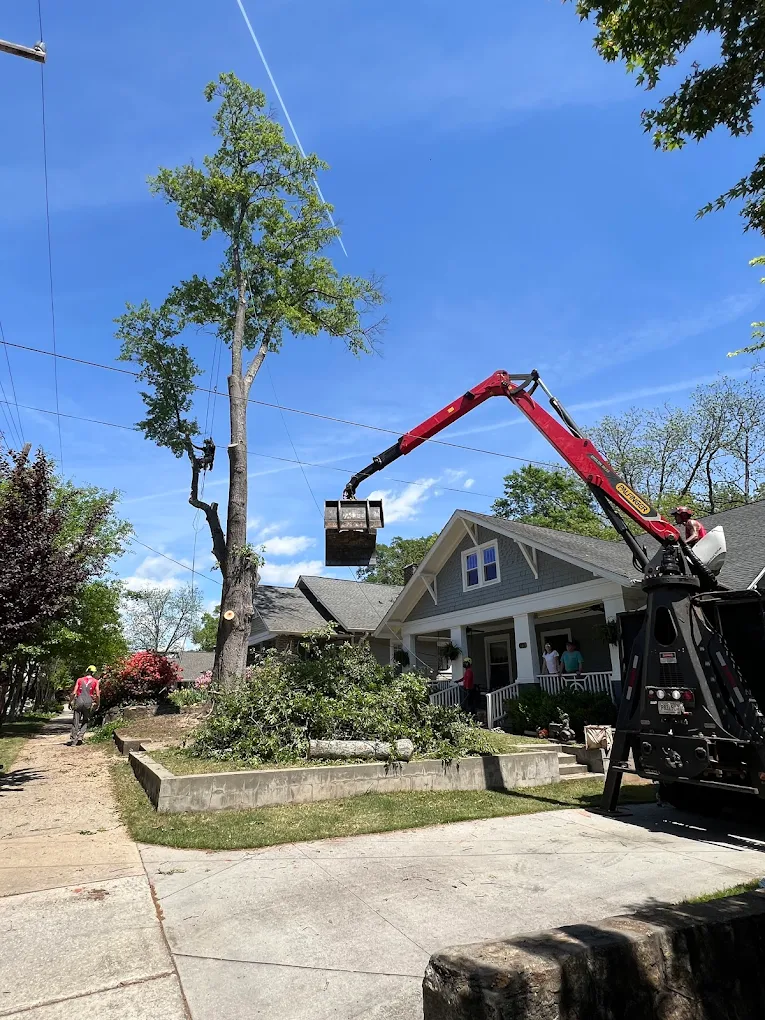
Option two is removal. If the tree is too close, too large, in declining health, or poses a risk that trimming alone can’t address, removal is the right call. Tanner’s Legendary Tree Service’s tree removal services in Spartanburg handle everything from straightforward residential removals to complex jobs in tight spaces near structures. For trees in difficult positions near homes, crane-assisted removal gives the crew precise control to lift and remove sections without dropping them on the structure below.
Option three is root barriers. In some situations, a root barrier can redirect root growth away from a foundation before serious damage occurs. This is a preventative measure, not a solution for existing root damage. If damage is already present, you’ll need both a tree assessment and a foundation inspection to understand the full scope of what you’re dealing with.
How Tanner’s Legendary Tree Service Works Near Structures
Every job near a home starts with a careful site assessment. Tanner’s Legendary Tree Service looks at the tree, the structure, the access points, and the safest plan for trimming or removal. No two jobs are the same, and the plan is always specific to the site.
For jobs in tight spaces, crane-assisted removal is available through Tanner’s Legendary Tree Service’s certified crane operator. This method allows sections of the tree to be lifted out without falling on the house, the fence, the landscaping, or anything else nearby. It’s the right tool for situations where a standard removal would put the structure at risk.
Zero impact tree removal is available for jobs where protecting the yard and landscaping is a priority. The team explains the plan before work starts and handles complete cleanup when the job is done. Fully insured, locally owned since 2016, and built on a reputation for doing the work right the first time.
When to Call Sooner Rather Than Later
If a tree is touching your roof right now, don’t put this off. Call soon and get an assessment before the next storm season. If branches are hanging over your roof or within 10 feet of it, schedule a trimming assessment and deal with it while it’s still a manageable situation.
If you’ve noticed new cracks in your foundation and have large trees nearby, get both a tree assessment and a foundation inspection. The two issues may be connected, and you’ll want to know the full picture before deciding on repairs.
If a tree is leaning toward your home, call now. A lean that develops or worsens over time is telling you something about the root system or the structural integrity of the tree. Don’t wait for a storm to make the decision for you. The International Society of Arboriculture at isa-arbor.com has solid resources on evaluating trees near structures if you want to read deeper into the subject.
To get a professional opinion on any tree near your home, get a free estimate from Tanner’s Legendary Tree Service and find out exactly what you’re dealing with.
Frequently Asked Questions
How do I know if a tree is too close to my house?
A general guideline is that any tree with branches that can reach your roof when they fall is too close. For roots, trees within 10 to 15 feet of your foundation deserve attention, especially fast-growing species. If branches are already touching your roof or gutters are constantly full of debris from a single tree, those are clear signs. Tanner’s Legendary Tree Service offers free estimates and can assess the specific situation at your property to give you a clear answer.
Can tree roots really damage a foundation?
Yes, and it happens more often than homeowners expect. Tree roots grow toward moisture and will follow drainage paths near a foundation. Over time, they can cause cracking, shifting, and in more serious cases, structural damage that requires expensive repairs. The tricky part is that this process is slow. You may not see visible evidence until the roots have been growing toward the foundation for several years. If you have large trees close to your home and you’re seeing new cracks appear, it’s worth getting a professional assessment.
Is it always necessary to remove a tree that’s close to the house?
Not always. If the tree is healthy and the main issue is overhanging branches, professional trimming may be enough to manage the risk. Tanner’s Legendary Tree Service will assess the health and structure of the tree and recommend the option that makes the most sense for your situation. Removal becomes the right call when the tree is too large, declining in health, structurally compromised, or positioned in a way that trimming alone can’t adequately address.
What happens if a tree near my house falls during a storm?
A tree that falls on a home can cause roof damage, structural damage, broken windows, and in serious cases, damage to interior spaces. It can also bring down power lines if it falls in that direction. Tanner’s Legendary Tree Service offers 24/7 emergency tree removal for exactly these situations. But the better outcome is addressing a risky tree before a storm forces the issue. A leaning tree or a tree with visible decay is a warning sign worth acting on before storm season.
How does crane-assisted tree removal work near a house?
Crane-assisted removal is used when a tree is in a tight spot where a standard felling would put the structure at risk. Instead of cutting the tree and letting it fall, sections are rigged and lifted out by crane and placed in a safe area away from the structure. Tanner’s Legendary Tree Service has a certified crane operator on staff and uses this method on jobs where protecting the house and surrounding property is the priority. It takes more planning and coordination, but it’s the right call for complex removals near homes.
Concerned About a Tree Near Your Home?
Tanner’s Legendary Tree Service provides tree trimming, hazardous tree removal, and free estimates for Spartanburg homeowners concerned about trees near their homes. We serve Spartanburg, Boiling Springs, Greenville, Greer, Simpsonville, and Upstate South Carolina. Visit tannerslegendarytreeservice.com to schedule your free estimate. You can also reach us directly at (864) 978-0160.