

Hurricane season tree prep isn’t just for coastal homeowners. If you live in Spartanburg or anywhere in Upstate South Carolina, the remnants of Atlantic and Gulf storms track right through your backyard every single year. Here’s what you need to know before the next one hits.
Why Upstate SC Homeowners Need to Take Storm Season Seriously
Spartanburg County doesn’t have to take a direct hit to feel the damage. When a hurricane weakens and moves inland, it doesn’t just disappear. It keeps moving, and it brings with it sustained winds, heavy rainfall, and gusts that can hit 40 to 60 miles per hour or more. That’s more than enough to bring down a weak or poorly maintained tree.
South Carolina sits directly in the path of Atlantic hurricane remnants. The storms that make landfall on the coast often track northwest, right over the Upstate. Late summer and fall are the worst window. August, September, and October tend to bring the most significant storm activity, and Spartanburg County sees serious tree damage almost every season.
The biggest risks are trees near your home, driveway, fence line, or utility lines. One large limb coming down on a roof can mean thousands of dollars in repairs. A full tree failure near a power line can knock out power for days. Proactive hurricane season tree prep costs a fraction of what emergency removal costs after a storm, and it’s almost always less stressful.
The Full Checklist: What to Do Before Storm Season Peaks
Checklist Item 1: Walk Your Property and Look Up
This sounds simple, but most homeowners don’t actually do it. Set aside 30 minutes and walk your entire yard. Look at every tree near your house, your driveway, your fence, and any utility lines running through or near your property. You’re looking for anything that seems off.
Pay attention to dead branches, sections of the canopy that look sparse or brown, and any limbs that are hanging at an odd angle. Look at the spots where large branches meet the trunk, called branch unions. If you see cracks or splits at those unions, that’s a red flag. Also note any trees that seem to be leaning in a direction they weren’t leaning before.
Write it all down. (Seriously, take notes on your phone or grab a notepad.) That list is exactly what you’ll want to have when you call for a professional estimate. It saves time and helps the arborist know where to focus.
Checklist Item 2: Identify Dead or Dying Branches
Dead branches are the first things to fall when a storm rolls through. They’re already disconnected from the tree’s living tissue, which means they’re dry, brittle, and just waiting for the right gust. They don’t need a hurricane. A strong afternoon thunderstorm can do the job.
Here’s a simple test you can do yourself. Scratch the bark on a branch with your fingernail. If the wood underneath is green, the branch is alive. If it’s brown and dry, it’s dead. This works on most tree species and gives you a quick read on what’s healthy and what’s not.
Any dead branches hanging over your roof, your driveway, a play area, or anywhere people spend time should be removed before storm season, not after. Professional trimming clears out that dead wood and also reduces the overall wind load on the tree. That means the tree is less likely to fail in high winds, even if it stays in place.
Checklist Item 3: Check for Trees Too Close to Your Home
If a tree’s branches are touching or overhanging your roof right now, that’s already a problem. In a storm, those branches become battering rams. Branches that scrape the roof in a normal afternoon wind will do real structural damage when gusts pick up to 50 or 60 miles per hour.
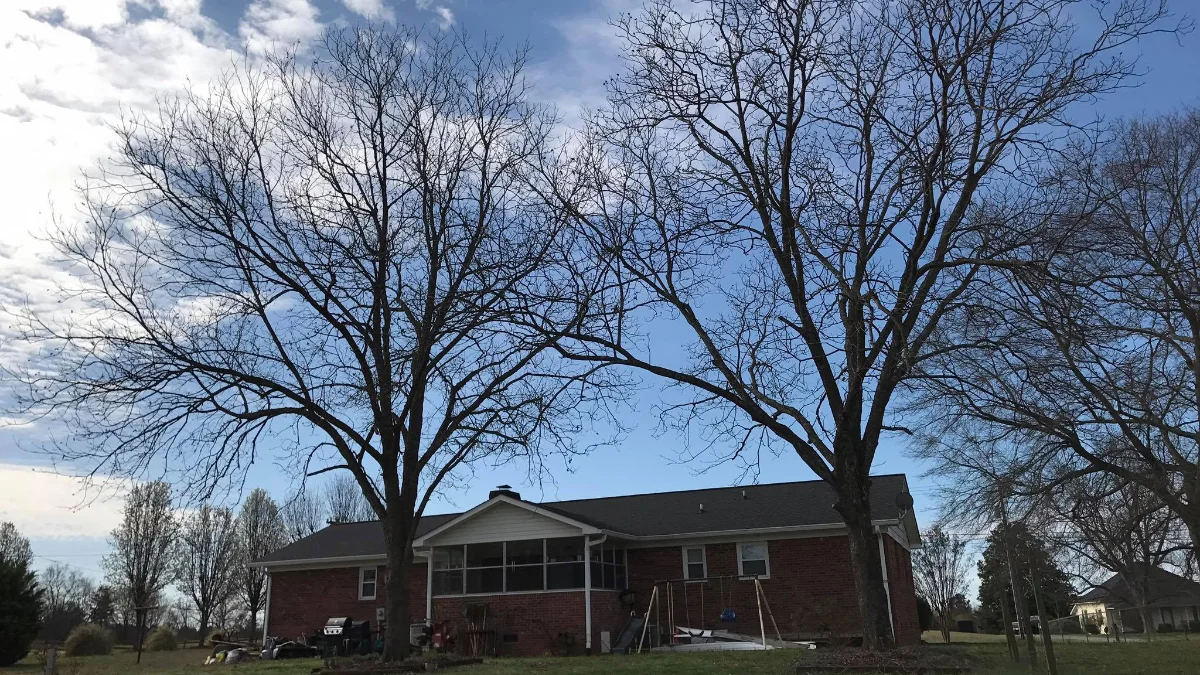
A general rule of thumb is this: any tree within striking distance of your home deserves a professional look. Striking distance is roughly the height of the tree. So if you have a 40-foot oak 30 feet from your house, that tree can reach your roof if it fails. That’s worth an assessment before the season peaks.
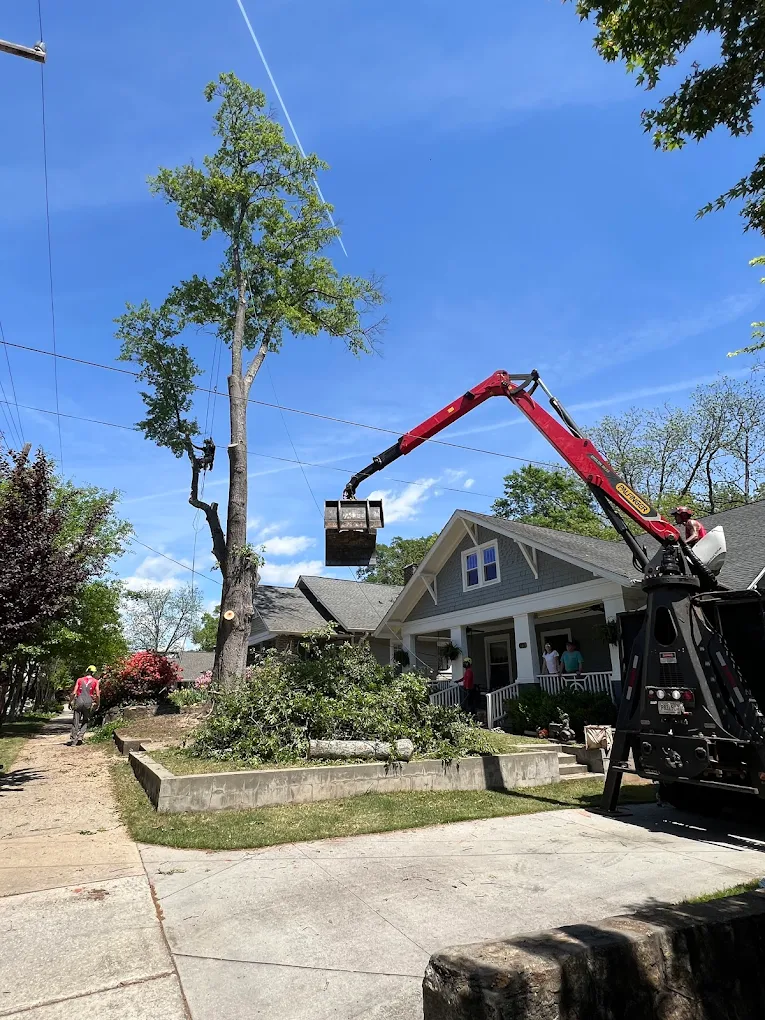
Sometimes trimming is enough to reduce the risk. Other times, removal is the right call. Either way, it’s a much better situation to make that decision on your schedule, when tree companies aren’t overwhelmed with post-storm calls. Tanner’s Legendary Tree Service’s tree trimming and pruning services in Spartanburg are available before the season gets busy, and that’s when you want to book.
Checklist Item 4: Look at the Root Zone
Most homeowners look up at the canopy and forget about what’s happening at the base of the tree. The root zone tells you a lot about a tree’s overall health and its ability to stay upright in a storm.
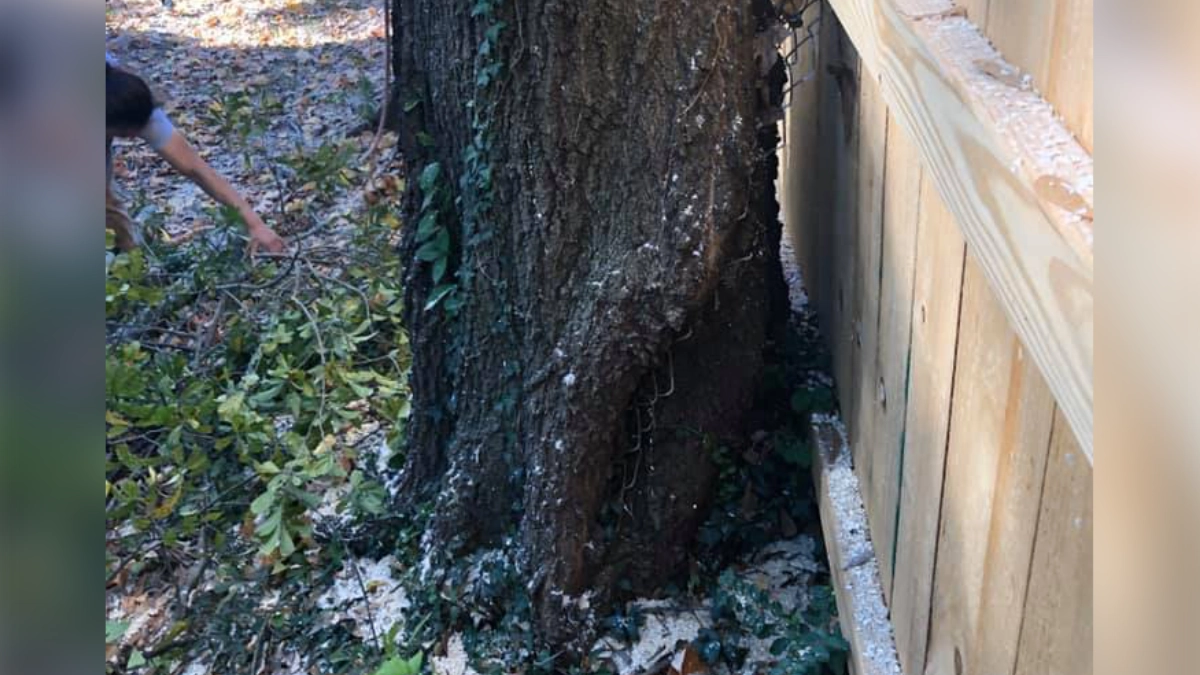
Walk around the base of each large tree on your property. You’re looking for a few specific things. Raised or cracked soil near the base can indicate that the roots are starting to shift or fail. A lean that seems newer than you remember is another warning sign. And if you see mushrooms or fungal growth at the base of the trunk, that’s a signal that internal decay may be present.
Soft or spongy bark at the base of the tree is also a concern. Trees with significant root zone problems often look healthy from a distance, but they’re at serious risk of full failure when high winds arrive. These are the trees that come down roots and all. That’s the most dangerous kind of failure because there’s very little warning.
Checklist Item 5: Schedule Professional Trimming Before the Season Peaks
The Atlantic hurricane season officially runs from June 1 through November 30. The peak of the season is August through October, which is when the most significant storm activity typically occurs. That’s your window to work with.
Tree companies throughout Spartanburg and Upstate South Carolina get extremely busy after major storms. Scheduling your trimming before the season peaks means you get the work done on your timeline, not in the chaos after a storm has already hit. You also avoid the long wait times that come with post-storm demand.
Professional trimming does a few important things for storm prep. It removes dead wood, which we already covered. But it also reduces wind resistance across the canopy, improves the structural balance of the tree, and helps identify problems that aren’t visible from the ground. Tanner’s Legendary Tree Service provides trimming and pruning throughout Spartanburg, Boiling Springs, Greenville, Greer, Simpsonville, and the surrounding Upstate South Carolina area.
Checklist Item 6: Know Your Emergency Plan Before You Need It
This is the checklist item that most people skip because it feels premature. But having a plan before a storm hits is a lot smarter than scrambling to figure it out while a tree is on your roof at 2 in the morning.
Save the contact information for a trusted local tree service before storm season starts. Know where your main water shutoff valve is in case a tree comes down on a water line. Keep your insurance company’s claims number somewhere easy to find. These are small things, but they matter when you’re stressed and dealing with storm damage.
If a tree does fall on your home during a storm, call your insurance company and a tree service at the same time. You’ll need documentation from both to move forward efficiently. Tanner’s Legendary Tree Service’s 24/7 emergency tree removal in Spartanburg means help is available whenever you need it, including nights, weekends, and the middle of a storm recovery.
What to Do When a Storm Is Already on the Way
If a major storm is approaching and you haven’t done your prep yet, there are a few things to keep in mind. First, do not attempt to trim or remove trees yourself in the days before the storm. That’s when accidents happen. People rush, they skip safety steps, and they get hurt. It’s not worth it.
If you have a tree that’s already concerning, call for an emergency assessment as soon as possible. A professional can tell you quickly whether the tree poses an immediate risk and what the options are. That call is worth making before the wind picks up.
After the storm passes, do not approach fallen trees or hanging branches until a professional has assessed the situation. Hanging branches, sometimes called widow makers, are extremely dangerous. They can shift or fall without warning. Wait until someone qualified has looked at the situation before you walk under any affected tree.
For up-to-date information on storm tracking and hurricane season activity, NOAA’s Atlantic Hurricane Season page at noaa.gov is a reliable resource for Upstate SC homeowners to bookmark.
Frequently Asked Questions
How early should I start hurricane season tree prep in Spartanburg?
The earlier the better, but the most important thing is to get it done before the peak of storm season, which runs August through October. Scheduling an assessment and any necessary trimming by late spring or early summer puts you ahead of the rush. Tree companies in Spartanburg book up fast after storms hit, so getting on the schedule early is a practical move. Tanner’s Legendary Tree Service offers free estimates, which makes it easy to find out what your trees actually need before you commit to any work.
How do I know if a tree needs to be removed or just trimmed?
That’s a judgment call that really needs a professional eye. Some trees with dead branches or minor structural issues can be addressed with trimming. Others with root zone problems, significant decay, or major structural failures may need to be removed. The key factors are the severity of the problem and how close the tree is to your home, driveway, or power lines. Tanner’s Legendary Tree Service can assess your trees and give you an honest recommendation based on what’s actually there, not what’s most expensive.
What happens if a tree falls on my house during a storm?
Call your homeowner’s insurance company right away to start a claim. At the same time, contact a professional tree service to get the tree removed safely. Do not go near the tree yourself until someone qualified has assessed it, especially if it’s touching a power line or if there are hanging branches above. Tanner’s Legendary Tree Service provides 24/7 emergency tree removal throughout Upstate South Carolina, so help is available around the clock when storm damage occurs.
Can dead branches really cause that much damage in a storm?
They absolutely can. Dead branches have no flexibility. A living branch bends in the wind. A dead one snaps. And because dead wood is dry and brittle, it doesn’t take much force to break it loose. A dead branch over a roof or a car can cause serious damage even in a moderate storm. Removing them before storm season is one of the simplest and most effective things a homeowner can do. It’s inexpensive compared to the cost of repairing a damaged roof or replacing a vehicle.
Does Tanner’s Legendary Tree Service serve areas outside of Spartanburg?
Yes. Tanner’s Legendary Tree Service serves Spartanburg, Boiling Springs, Greenville, Greer, Simpsonville, and surrounding Upstate South Carolina communities. Whether you need routine trimming before the season or emergency removal after a storm, the service area covers a wide portion of Upstate SC. You can schedule a free tree estimate with Tanner’s Legendary Tree Service through their website to find out what’s available in your area.
Get Your Trees Ready Before the Next Storm
Tanner’s Legendary Tree Service provides tree trimming, hazardous tree removal, and 24/7 emergency tree service throughout Spartanburg, Boiling Springs, Greenville, Greer, Simpsonville, and Upstate South Carolina. Don’t wait for a storm to find out your trees weren’t ready. Visit tannerslegendarytreeservice.com or call (864) 978-0160 for a free estimate.