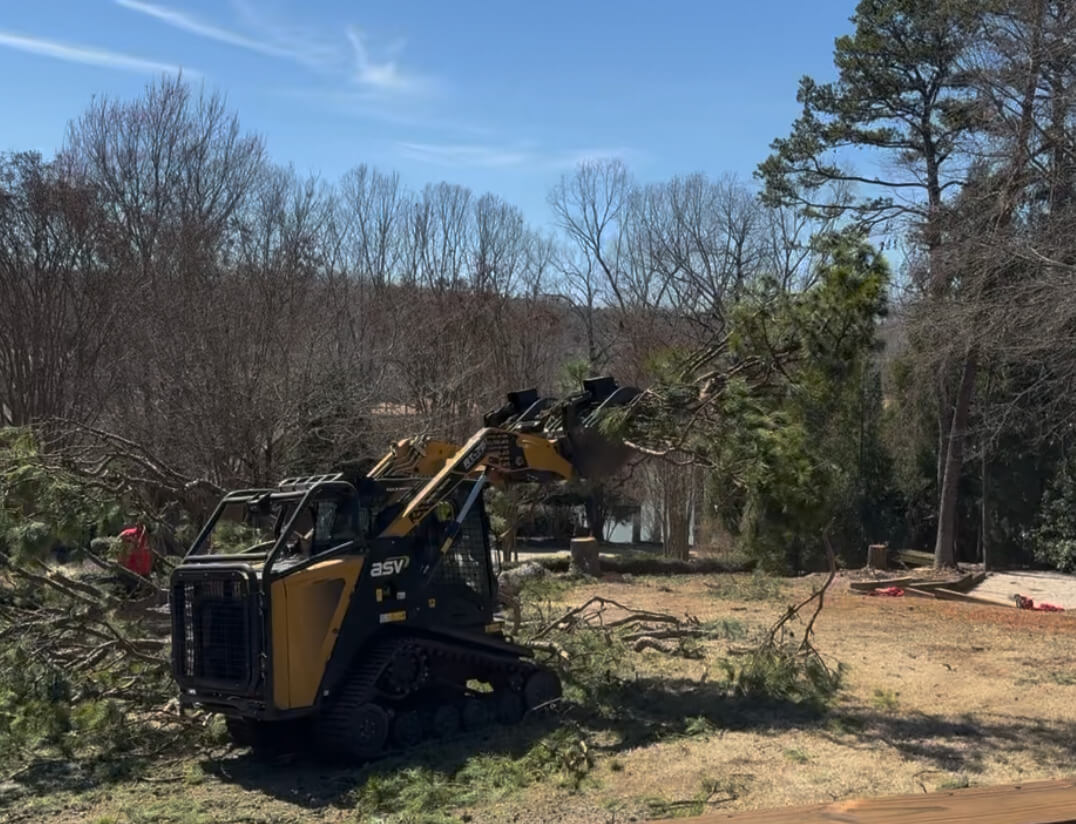


Spring shows up fast in the Upstate.
One week everything still feels bare, then suddenly your yard is full again. Leaves are coming in, trees are filling out, and things that looked fine a month ago start to look… a little off.
This is usually when homeowners start noticing things they did not catch over winter. And honestly, that makes sense. When trees are dormant, it is easy to miss structure issues. Spring brings everything back into focus.
If you walk your property right now and take a closer look, there are a few specific things worth paying attention to.
Why Spring Is the Best Time to Spot Tree Issues
There is a small window in early to mid-spring where trees tell you exactly what is going on.
New growth starts to fill in, but not so much that it hides the structure. You can still see branch patterns, spacing, and any early signs of stress.
This is also when minor issues start becoming visible:
- Small cracks that were not obvious before
- Branches competing for the same space
- Areas where growth is too dense
It is a bit like turning the lights on in a room you have not checked in a while. Nothing changed overnight, you are just seeing it more clearly now.
And that clarity is useful. Because once everything fully leafs out, a lot of those details get hidden again.
4 Things to Look for Around Your Property Right Now
You do not need to be an arborist to catch early warning signs. A simple walk around your yard can tell you a lot.
1. Limbs Growing Too Close Together
When branches grow too close or start crossing, they end up rubbing against each other over time.
That friction wears down bark and creates entry points for pests and disease. It also weakens both limbs structurally.
In spring, these tight growth patterns are easier to spot before everything fills in completely.
2. Early Signs of Splitting or Cracking
This one matters more than most people think.
Small cracks where branches meet the trunk or each other can turn into full splits later on. Especially as the tree adds weight through the season.
You might notice:
- A slight separation at the base of a limb
- A visible line running along a branch union
- Areas that look stressed or pulled apart
Catching this early gives you options. Waiting usually does not.
3. Dense Canopies That Need Thinning
Some trees grow fast and thick.
When the canopy gets too dense, it creates a few problems:
- Reduced airflow
- Uneven weight distribution
- Interior branches getting weak from lack of light
Spring is a good time to thin things out before that density becomes an issue later in the season.
4. Trees Too Close to Structures
This is one people tend to ignore until it becomes inconvenient.
Branches hanging over your roof or growing close to your home can cause gradual damage. Not all at once, just over time.
Right now is a good time to step back and look at spacing.
If a tree is already touching or getting close, it is not going to move away on its own.
What Spring Pruning Actually Does
There is a misconception that pruning is mostly about appearance.
It is not.
Done correctly, spring pruning is about:
- Improving structure
- Reducing future stress points
- Guiding how the tree grows through the season
You are not just cutting branches. You are shaping how that tree handles weight, wind, and growth over time.
Sometimes that means removing a few small limbs. Sometimes it means making a call about a larger structural issue.
Either way, earlier is almost always better.
The Tree We Keep Seeing Right Now: Bradford Pear
If you live anywhere in the Upstate, you have seen them.
Bradford pears are everywhere.
They bloom early, look full and healthy, and from a distance, they seem like a great addition to a yard.
Up close, it is a different story.
Why Bradford Pears Become a Problem
The issue is not how they look. It is how they grow.
Bradford pears tend to develop:
- Tight branch angles
- Weak attachment points
- Multiple limbs competing from the same spot
As they mature, those structural weaknesses start to show.
And spring is usually when the early signs appear.
You might notice a tree that looks perfectly fine overall, but has one or two areas where the branches are starting to separate or press against each other.
That is often the beginning of a larger issue.
Why Spring Is When Problems Show Up
This part catches people off guard.
The tree is leafing out, looks healthy, maybe even better than ever. But underneath that growth, the structure is under stress.
As weight increases, those weak unions start to feel it.
Spring makes those stress points visible before they fail.
Prune or Remove? How to Think About It
Not every Bradford pear needs to come down right away.
There are cases where light pruning can help manage growth and reduce immediate risk.
But there are also cases where removal is the better long-term decision.
A few things that usually influence that call:
- Age and size of the tree
- Severity of structural issues
- Proximity to your home or driveway
- History of previous splitting or damage
This is where having someone take a look helps.
From the outside, it can be hard to tell the difference between a manageable issue and a tree that is going to keep causing problems.
Getting Ahead of Problems vs Reacting to Them
Most of the calls we get later in the year start the same way.
“Something just broke.”
By that point, the situation is already urgent. There is usually damage, cleanup, and a much bigger job than it needed to be.
Spring gives you a different option.
You can:
- Spot issues early
- Make smaller, controlled adjustments
- Decide on removal before it becomes necessary
It is less about doing more work and more about doing the right work at the right time.
A Quick Check You Can Do Today
If you are not sure where to start, keep it simple.
Walk your property and look for:
- Any branches touching or close to your home
- Areas where limbs are crossing or crowded
- Visible cracks or stress points
- Trees that look overly dense or uneven
You do not need to diagnose anything.
Just notice what stands out.
If something feels off, it usually is worth a closer look.
Why Local Experience Matters in the Upstate
Tree growth in Upstate South Carolina moves fast once the season starts.
The mix of weather, soil, and common tree types here creates its own patterns. What works in one region does not always apply the same way here.
Bradford pears are a good example. They were planted heavily across the area for years, and now we are seeing the long-term results of that.
Understanding how these trees behave locally makes a difference when deciding what to prune, what to monitor, and what to remove.
Final Thought Going Into the Season
Most tree problems do not start as emergencies.
They start small, quiet, and easy to miss.
Spring is when those early signs show up. It is also when you still have time to do something about them without it turning into a bigger issue later.
Even a quick look now can save you a lot of trouble down the line.
If you have questions about something on your property or just want a second opinion, it is always easier to look at it early than to deal with it after the fact.
10% off Bradford pear removals this season for homeowners ready to address problem trees early.
FAQs
1. When is the best time for spring tree care in Upstate South Carolina?
Early spring is the ideal time for tree care in Upstate SC, as trees begin active growth and can recover quickly from pruning, trimming, and preventative treatments. Addressing tree health early helps reduce the risk of disease, storm damage, and overgrowth during the warmer months.
2. What tree services are most important in the spring in Spartanburg and Greenville, SC?
Spring tree care typically includes pruning, trimming, plant health care, and inspections for storm damage. Services like tree removal, stump grinding, and preventative maintenance are also common to ensure trees remain safe and healthy throughout the season.
3. Why is spring tree pruning important for tree health in Upstate SC?
Spring pruning removes dead or weak branches, improves airflow, and encourages healthy growth. This reduces the risk of falling limbs and helps trees better withstand storms, which are common in the Upstate South Carolina region.
4. How do I know if my tree needs to be removed this spring?
Signs a tree may need removal include visible decay, leaning, storm damage, or branches hanging over structures or power lines. Professional assessments are recommended because tree removal can be hazardous without proper equipment and planning.
5. Can spring tree care help prevent storm damage in South Carolina?
Yes, proactive tree care like trimming, structural pruning, and removing weak limbs significantly reduces the risk of storm damage. Regular maintenance strengthens tree structure and minimizes hazards during heavy winds and storms common in the region.
6. Should I hire a professional tree service for spring maintenance in Upstate SC?
Hiring a professional ensures safe, efficient tree care using proper equipment and techniques. Experienced crews can handle everything from pruning to emergency tree removal while protecting your property and maintaining tree health.