
It’s a stormy night. The winds are high, and the rain is torrential. All of a sudden: crash.
Your tree has fallen.
What do you do?
You know you need to take action, because a fallen tree is more than just a mess; it’s a hazard. It could damage your property, your vehicle– even you. But what are the exact steps you need to take, and in which order?
In this guide, we’re breaking down what to do when a tree falls– be it in a storm or for any other reason– and why calling for professional emergency tree removal should be your first step.
Step 1: Stay Calm and Assess the Situation Safely
Many homeowners are tempted to run outside toward the tree to assess the damage. Don’t do that. The first step in knowing what to do when a tree falls is to stay safe, and by staying safe, we mean stay away. Here’s why:
Power Line Dangers
That tree could easily have taken down some power lines. Heavy branches could also have split from the tree and become tangled in a power line or on another tree– and those could fall at any time.
Shifting Roots
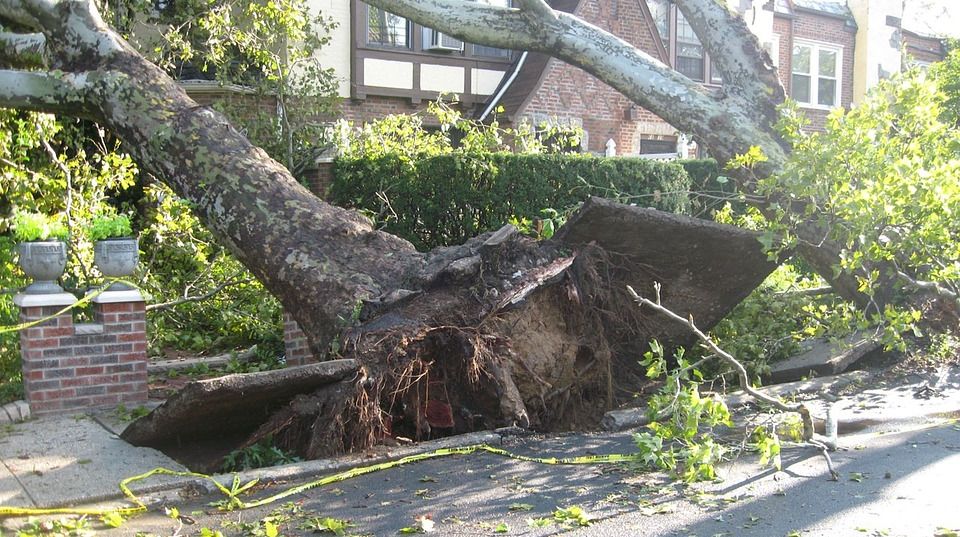
Shifting roots are another, lesser known danger when a tree falls. The root ball of a tree (the clump of soil and roots) can be lifted partly out of the ground in the fall, which means the weight of the tree becomes unevenly distributed. This can cause the tree to shift or roll unpredictably, so even though the tree may be down, it may not have stopped moving.
The Risk of “Spring Back”
Shifting roots can also cause a rare but dangerous “spring back” effect, which means that the tree can suddenly spring back into position– and you don’t want to be standing anywhere near it when it does.
Unstable Soil Conditions
Shifting roots make it difficult to tell how stable the soil surrounding them has become; if you walk too close to the fallen tree, you’re at risk of the ground suddenly giving way.
Assess the tree from a distance, check for power line involvement, and gauge where the tree fell and what has been affected. You’ll need to call for emergency tree removal, but take these important steps first.
Step 2: Protect People and Property
If the tree has fallen on a structure, evacuate anyone who might be in danger. Make sure that your pets and your kids are stationed far away from where the tree fell, so that there are no more accidents while you handle the issue. If any neighboring properties have been affected or could be affected, alert them too. Call them instead of going to them; don’t climb over debris to knock on their door.
If it’s safe to do so, (and only if it is 100% safe to do so) move vehicles out of the way. This can help prevent any damage (or further damage) if another branch comes down, or if the tree shifts. Safety comes first, always, so this is worth repeating: only move vehicles if it is safe to do so. If you see any branches caught above your vehicle, wait for the emergency tree removal service to come and move your vehicle or the branch; it’s not worth risking your life to move a car.
Step 3: Call for Professional Emergency Tree Removal
And now for the next essential step in what to do when a tree falls: call for emergency tree removal. No matter how small the tree might be, don’t attempt to move it yourself; it’s a huge safety risk. Aside from the obvious risks, DIY often causes more damage than it prevents. You need a team who not only has the experience and equipment to handle the problem, but who is also properly trained and insured to handle the situation.
Our expert team at Tanner’s Legendary Tree Service is just a phone call away– and we offer a 24/7 emergency tree removal service. Just give us a call and we’ll send a team out there to quickly, safely, and effectively remove the tree.
Step 4: Contact Utilities and Insurance if Needed
Wondering what to do when a tree falls on a power line, or if it causes damage to your home? First things first: if the tree hits a power line, call the power company immediately. They’ll need to send a team to safely address the issue.
If the tree causes damage to your property or a vehicle, you’ll need evidence for your insurance company. Document the damage by taking plenty of photos that clearly show what happened and where the damage was done. Once you have your photos, you can call your insurance company and ask them about the next steps.
Step 5: Schedule Cleanup and Prevent Future Emergencies
Now that you’ve called for emergency tree removal, that situation is going to be handled by professionals. But what comes next? You’ll probably be left with a tree stump, which can be a trip hazard. Aside from that, it’s a bit of an eyesore and can attract insect infestation. Our team at Tanner’s Legendary Tree Service can take care of stump grinding for you! We’ll grind past the surface so that the dead tree won’t resprout saplings or attract insects, and we’ll clear up all the debris so you’re not lumbered with a huge pile of wood chips!
Next up we need to prevent this kind of problem from happening in the future. When it’s safe to do so, it’s important to examine the rest of the trees on your property, to see if they are healthy or if they’re at risk of falling too. Check for diseased branches, fungi, and insects (these are all signs your tree may be dying and vulnerable against the elements). Don’t assume this won’t happen again; preventing future emergencies from happening is just as important as knowing what to do when a tree falls.
To keep your trees strong, healthy, and less at-risk of falling, we recommend you schedule tree trimming (to keep your branches strong and healthy) or tree pruning (in case of disease or infestation). If you do notice diseased branches, fungi, or you suspect insect infestation, it’s definitely a good idea to get a professional arborist in to assess the situation. You don’t need to figure this out by yourself: our expert team can come and tell you which (if any) treatments your trees need to safeguard you and your property against another emergency tree removal.
Why Speed Matters with Emergency Tree Removal
Some homeowners don’t think they need to arrange emergency tree removal if the tree in question didn’t cause any extreme damage. But anyone who knows what to do when a tree falls knows that a fallen tree could still shift suddenly (or even, as we covered earlier, “spring back”). This can cause secondary damage. So it’s definitely important to treat a tree falling unexpectedly as a priority, and call for emergency tree removal to protect you and your property from harm. Delays in reporting and fixing the issue can also increase insurance costs!
Let’s Review
To recap, here are the 5 steps we recommend when a tree falls: stay calm and assess the situation (from a safe distance). Protect people and your property by getting everyone out of harm’s way, then call a professional for emergency tree removal. Contact utilities and insurance if needed, and then prevent future emergencies by making sure the rest of the trees on your property are healthy and strong.
If you ever need a quick, safe, and reliable emergency tree removal service, contact us at Tanner’s Legendary Tree Service: we’re there 24/7 to help keep you, your family, and your property safe.